
Where's the Evidence? Understanding Real Faith vs. Empty Claims
In a world full of stories and claims about faith, one uncomfortable question cuts through all the noise: Where's the evidence? James chapter 2 presents one of the most challenging passages in the New Testament, forcing us to examine whether our faith is genuine or merely empty words.
What Does It Mean When Faith Never Moves You?
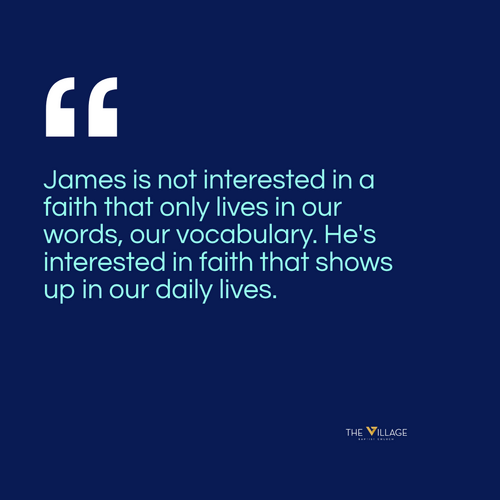
James opens with a piercing question: "What good is it, my brothers and sisters, if someone claims to have faith but does not have works? Can such faith save him?" Notice the key word here - "claims." James isn't talking about someone who actually has saving faith, but someone who merely says they do.
The expected answer to his question is a resounding no. There exists a kind of faith that does not save - a faith that exists only in words and claims, never translating into action.
The expected answer to his question is a resounding no. There exists a kind of faith that does not save - a faith that exists only in words and claims, never translating into action.
The Problem with Religious Language Without Action
James illustrates this with a stark example: imagine a fellow believer without clothes or food, in desperate need. Someone responds with religious phrases like "I'll pray for you" or "Be warm and God bless," but does absolutely nothing to help. James asks bluntly: "What good is that?"
We've become skilled at Christian vocabulary and religious phrases, but James challenges us: if compassion never leaves your mouth and enters your hands, something is fundamentally wrong.
We've become skilled at Christian vocabulary and religious phrases, but James challenges us: if compassion never leaves your mouth and enters your hands, something is fundamentally wrong.
Is Dead Faith Really That Serious?
James doesn't mince words. He calls faith without works "dead" - not weak, not immature, not struggling, but dead. Like a corpse that may look fine on the outside but has no life within, this kind of faith has no spiritual vitality.
Real faith moves. Real faith acts. Real faith changes how we live our daily lives. If our faith never produces evidence in our behavior, it may never have been genuine saving faith at all.
Real faith moves. Real faith acts. Real faith changes how we live our daily lives. If our faith never produces evidence in our behavior, it may never have been genuine saving faith at all.
How Is Faith Proven Rather Than Just Claimed?
James anticipates the common rationalization: "You have faith and I have works - we're just wired differently." But he dismantles this argument completely. Faith and works cannot be separated in genuine Christianity.
Even Demons Have Correct Theology
Here comes James' most jarring statement: "You believe that God is one? Good! Even the demons believe—and shudder." Demons have correct theology. They believe in God's existence and know Jesus is Lord. Yet they're not saved.
Why? Because belief without surrender is not saving faith. Knowing facts about God is not the same as trusting Him with your life. James calls this kind of faith both "senseless" and "useless."
Why? Because belief without surrender is not saving faith. Knowing facts about God is not the same as trusting Him with your life. James calls this kind of faith both "senseless" and "useless."
What Does Real Obedience Look Like?
James brings in Abraham, the hero of faith, to illustrate his point. Abraham was declared righteous by faith in Genesis 15, long before the events of Genesis 22 when he offered Isaac. James isn't saying Abraham was saved by works - Scripture is clear that salvation is by faith alone.
The Difference Between Paul and James
Paul answers the question: "How is a sinner made right with God?" (Answer: by faith alone) James answers: "How can you tell if someone has faith?" (Answer: by their works)
Abraham's faith was proven when he obeyed. His works didn't create his faith - they completed it, revealed it, and demonstrated its reality.
The Difference Between Paul and James
Paul answers the question: "How is a sinner made right with God?" (Answer: by faith alone) James answers: "How can you tell if someone has faith?" (Answer: by their works)
Abraham's faith was proven when he obeyed. His works didn't create his faith - they completed it, revealed it, and demonstrated its reality.
Does Faith Have to Be Famous to Be Real?
James moves from Abraham, the respected patriarch, to Rahab, a Gentile prostitute. Why this dramatic contrast? Because James wants us to understand that faith shows up in ordinary, messy lives.
Rahab believed God, acted on that belief by hiding the spies, and risked her life in the process. Her faith was proven by what she did - not that her works saved her, but that her works revealed her genuine faith.
Rahab believed God, acted on that belief by hiding the spies, and risked her life in the process. Her faith was proven by what she did - not that her works saved her, but that her works revealed her genuine faith.
How Obvious Is Dead Faith?
James closes with a final, unmistakable image: "Just as the body without the spirit is dead, so faith without works is dead." You don't need medical training to recognize a lifeless body - there's no breath, no pulse, no signs of life.
Dead faith is equally obvious. There's no obedience, no compassion, no transformation. In essence, there's no real faith at all.
Dead faith is equally obvious. There's no obedience, no compassion, no transformation. In essence, there's no real faith at all.
What's the Evidence in Your Life?
If we claim to have faith, there should be evidence in our lives. Think of it this way: someone can claim to be a scratch golfer, but if they can't break 100, the evidence contradicts the claim. Someone can claim to be a great marksman, but if they can't hit the target, their actions reveal the truth.
James forces us to ask: Where's the evidence of our faith claims?
James forces us to ask: Where's the evidence of our faith claims?
What James Is NOT Asking
James isn't asking if you're perfect or if you have everything together. He's asking if your faith is alive. Does it show up in:
- How you love people?
- How you forgive others?
- How you give generously?
- How you obey God, even when it's difficult?
Life Application
The truth James won't let us avoid is this: if there's no evidence, there's no story. If your faith never changes your life, it may have never saved you. But here's the great news - real faith isn't about trying harder; it's about trusting deeper.
This week, challenge yourself with these three applications:
First, examine your faith, not someone else's. James isn't permitting us to become the faith police. Look in the mirror and ask: If someone were to watch my life, what would they conclude about my faith? Where is my faith visible in obedience, compassion, and trust?
Second, let faith move from words to actions. Don't just say "I'll pray for you" - actually pray and show up when there's a need. Don't just say "I care about you" - act with compassion and get involved in someone's difficult situation. Trust God and obey Him this week, even when it costs you something.
Third, trust Christ first, then live it out. Remember that works are not the root of salvation - they're the fruit of it. If your faith feels dead or empty, the answer isn't trying harder; it's trusting deeper in Christ. Come back to Jesus, surrender your life to Him, and let Him change you from the inside out.
Ask yourself these questions:
When Christ is truly Lord, obedience becomes the evidence. Real faith always leaves a mark - make sure yours does too.
This No Filter series brought by our Interim pastor Sandy Marks, and Pastor Rod, has been so powerful to start a new year. We pray that 2026 brings new strongholds of faithfulness, and brings more to Jesus, or brings us closer to Jesus than ever before.
If you want to start from the beginning of their series, check out these posts next:
Where's the Evidence? Understanding Real Faith vs. Empty Claims
Caught in the Acts of Obedience: When Faith Shows Up in Real Life
We hope you come on Sunday to hear his next installment in this series, or make sure you tune in live on Sunday at 9:30AM or 11:00AM!
This week, challenge yourself with these three applications:
First, examine your faith, not someone else's. James isn't permitting us to become the faith police. Look in the mirror and ask: If someone were to watch my life, what would they conclude about my faith? Where is my faith visible in obedience, compassion, and trust?
Second, let faith move from words to actions. Don't just say "I'll pray for you" - actually pray and show up when there's a need. Don't just say "I care about you" - act with compassion and get involved in someone's difficult situation. Trust God and obey Him this week, even when it costs you something.
Third, trust Christ first, then live it out. Remember that works are not the root of salvation - they're the fruit of it. If your faith feels dead or empty, the answer isn't trying harder; it's trusting deeper in Christ. Come back to Jesus, surrender your life to Him, and let Him change you from the inside out.
Ask yourself these questions:
- What evidence of living faith is visible in my daily life?
- Am I trusting Christ with my whole life, or just giving Him lip service?
- How can I move beyond religious words to genuine, costly obedience this week?
- Where is God calling me to act on my faith in practical ways?
When Christ is truly Lord, obedience becomes the evidence. Real faith always leaves a mark - make sure yours does too.
This No Filter series brought by our Interim pastor Sandy Marks, and Pastor Rod, has been so powerful to start a new year. We pray that 2026 brings new strongholds of faithfulness, and brings more to Jesus, or brings us closer to Jesus than ever before.
If you want to start from the beginning of their series, check out these posts next:
Where's the Evidence? Understanding Real Faith vs. Empty Claims
Caught in the Acts of Obedience: When Faith Shows Up in Real Life
We hope you come on Sunday to hear his next installment in this series, or make sure you tune in live on Sunday at 9:30AM or 11:00AM!
Posted in Sermons
Posted in Sunday Sermon, Sermon Recap, No Filter Series, Evidence, Evidence of Faith, Village Baptist Church, New Testament, James
Posted in Sunday Sermon, Sermon Recap, No Filter Series, Evidence, Evidence of Faith, Village Baptist Church, New Testament, James
Recent
Do You Know the Real Jesus? What the Bible Says About Who He Truly Is
August 19th, 2026
How to Enter God's Presence: What Worship Really Means
August 3rd, 2026
When Guilt Won't Stay Buried: What Joseph's Brothers Teach Us About Conviction, Pressure, and Healing
July 14th, 2026
What Does God Do With Our Hidden Past? Lessons From Genesis 42
July 7th, 2026
From Prison to Palace: How God Prepares You Before He Promotes You
July 1st, 2026
Archive
2026
January
February
March
April
May
June
July
2025
November
No Comments