
What Makes a Healthy Church? It Starts With Love for Jesus
It's easy to measure a church by its programs, its building, its attendance, or its leadership. But what if those things, as good as they are, aren't actually the foundation of a healthy church? Jesus pointed to something far more personal when He restored Peter after the resurrection. His question wasn't about strategy or structure. It was about the heart.
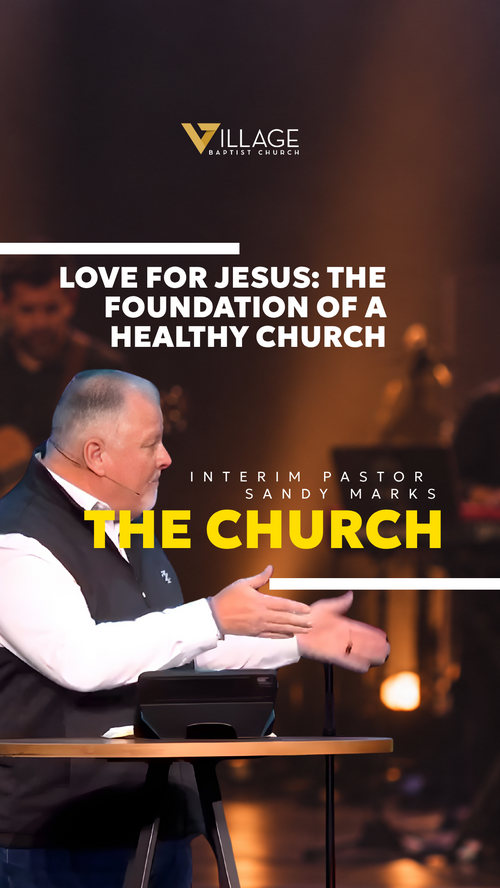
Why Church Health Isn't About Programs or Buildings
A church can have a beautiful building and a broken fellowship. It can have a full calendar and an empty spiritual life. It can have gifted leaders and people who have lost sight of why they gather. It can have impressive programs and still be without a genuine love for Jesus.
Programs serve a purpose. Buildings provide a place for ministry. Pastors and leaders help equip a congregation. But none of those things can serve as the foundation for a healthy church.
A church can do a lot of things for Jesus while slowly losing its love for Jesus.
Programs serve a purpose. Buildings provide a place for ministry. Pastors and leaders help equip a congregation. But none of those things can serve as the foundation for a healthy church.
A church can do a lot of things for Jesus while slowly losing its love for Jesus.
What Jesus Asked Peter After the Resurrection
In John 21, after the resurrection, Jesus meets His disciples by the sea. He turns to Simon Peter and asks him a question that reaches far beyond that shoreline conversation. It touches the heart of every believer and every congregation.
"When they had eaten breakfast, Jesus asked Simon Peter, 'Simon, son of John, do you love me more than these?' 'Yes, Lord,' He said to Him, 'you know that I love you.' 'Feed my lambs,' he told him." - John 21:15
This is the same Peter who had confidently declared he would never deny Jesus, and then denied Him three times beside a charcoal fire. Now, beside another charcoal fire, the risen Christ gives Peter an opportunity to affirm His love and receive a renewed responsibility.
Jesus does not ignore Peter's failure. But He doesn't let that failure have the final word either.

A Healthy Church Begins With a Personal Love for Jesus
Notice what Jesus does not ask Peter. He doesn't ask whether Peter loves the other disciples. He doesn't ask about the mission, the crowds, the ministry opportunities, or the position of leadership Peter is about to receive. He asks one deeply personal question: do you love me?
We can love our traditions. We can love our worship style. We can love our classes, our buildings, our ministries, and our friendships. But none of those can take the place of loving Jesus Himself.
There is a difference between loving Jesus for what He gives us and simply loving Jesus for who He is.
Think about the church in Ephesus. In Revelation 2, Jesus commended them for their work, their perseverance, and their commitment to sound doctrine. They were doing a lot of things right. But He confronted them because they had abandoned their first love. It is possible to be busy doing the work of the Lord while neglecting the relationship with the Lord of the work.
Churches go through seasons. Pastors come and go. Programs succeed and fail. Buildings require repairs. Attendance rises and falls. If our love is built primarily on those things, our spiritual health will always be vulnerable to change. But when our love is rooted in Jesus Christ, we have a foundation that remains steady through every season.
What Does "More Than These" Mean?
When Jesus asked Peter, "Do you love me more than these?", He may have been gesturing toward Peter's fishing boat. After the crucifixion, when everything seemed lost, Peter told the other disciples he was going back to fishing. Jesus may have been asking: do you love me more than the things that give you security and comfort?
Whatever "these" referred to in that moment, the essential question is unmistakable. Jesus was asking Peter where He stood in His affections. What holds first place in your life?
For a church, that means Jesus must be more important than preferences, traditions, reputations, and personal agendas. We do not gather primarily because we enjoy the people we gather with. We gather because Jesus Christ is worthy of our worship.
We do not exist primarily to preserve an institution. We exist to glorify God, to make disciples, and to carry the gospel to the world.
A Healthy Church Demonstrates Its Love Through Obedience
Three times Jesus asks Peter if He loves Him. Three times Peter says yes. And each time, Jesus responds with a responsibility: feed my lambs, shepherd my sheep, feed my sheep.
Jesus is not suggesting Peter can earn His love through ministry performance. Peter is being restored by grace. But Jesus makes clear that genuine love for Him has real consequences for how Peter lives and serves.
"If you love me, you will keep my commandments." - John 14:15
Biblical love is not just knowing the right things to say or being moved during a worship experience. Genuine love for Christ expresses itself in a willingness to follow Him.
When Preferences Become a Problem
A healthy church is not simply a church where people enjoy being together. It is a church where people are increasingly willing to obey Jesus together.
Sometimes we confuse preferences with biblical convictions. We can become so deeply attached to the way something has always been done that a quiet question begins to develop over time: am I getting what I want from this church? Instead of: are we following Jesus?
Preferences are not bad. The problem comes when our preferences become more important than our obedience to Christ. A church can become very successful at maintaining its own comfort while becoming less effective at carrying out the gospel.
Jesus did not call us to build a comfortable Christian club. He called us to follow Him and make disciples. That means a healthy church must continually ask whether its ministries are helping people know Christ, grow in Christ, serve Christ, and make Christ known.
Love for Jesus will lead you into uncomfortable places. It may require surrendering a preference, forgiving an offense, welcoming someone different, or taking the gospel to someone who has never heard it. A healthy church is not a church where everybody gets their way. It is a church where people are learning to put the will of Christ above their own will.
A Healthy Church Expresses Its Love Through Caring for Others
Each time Peter affirms his love for Jesus, Jesus directs Him toward the care of other people. Feed my lambs. Shepherd my sheep. Feed my sheep.
Jesus is teaching Peter that love for the shepherd must express itself in care for the flock. Peter's love for Jesus cannot remain a private feeling between Him and His Lord. It must become visible in the way he loves other people.
The church belongs to Jesus Christ. The people are His sheep. That truth should change the way we approach church life entirely.
If the church belongs to Jesus, then we must care about the things He cared about. The spiritual growth of His people. The needs of hurting families. The discipleship of children and students. The encouragement of weary believers. The salvation of people who are far from God.
We cannot claim to love the shepherd while treating His sheep carelessly.
What a Church That Loves People Actually Looks Like
A healthy church is not a place where people simply attend the same service. It is a people who take responsibility for one another's well-being personally. It is a church where people notice when someone is missing. Where a struggling family finds compassion rather than judgment. Where new believers are discipled instead of just counted. Where older believers invest in younger believers. Where people use their gifts to build up others rather than compete for recognition.
Sometimes we make church health more complicated than it needs to be. We assume we need a new program, a new ministry model, or a new organizational structure. But one of the most powerful signs of a healthy church is much simpler. It is that the people of God genuinely love one another because they genuinely and ultimately love Jesus.
Imagine a church where members did not wait for the pastor or staff to initiate every ministry or care for every hurting person. Imagine a church where people saw ministry not as something the leadership does, but as something the entire body shares. That is the kind of church Jesus is calling us to be.
Caring for people does not always mean making everyone comfortable. Sometimes it means having a difficult conversation. A shepherd guides, corrects, protects, and leads. Genuine love seeks what is best for people, even when that requires patience, sacrifice, and honesty.
Four Questions to Ask About the Church We Want to Be
- Do I love Jesus, or do I primarily love what I get from Jesus? Our love for Christ must remain greater than our attachments to traditions, preferences, personalities, and personal comfort.
- Are our ministries helping us accomplish the mission Christ has given us? We should be grateful for programs, but we must continually evaluate whether they move us toward the mission or simply maintain our comfort.
- Am I taking personal responsibility for caring for the people around me? Ministry is not something to leave to someone else. Every member has a part to play.
- Is love for Jesus the foundation of everything we do together? Before asking what we need to change or build or accomplish, we must ask whether we are growing in our love for Him.
Life Application
This week, before evaluating anything about your church, your pastor, your programs, or your preferences, take an honest look at your own heart. Ask yourself whether your love for Jesus is the actual foundation of your faith, or whether it has quietly been replaced by comfort, habit, or what you get out of the experience.
Then do one concrete thing to express that love outward. Reach out to someone who is struggling. Encourage someone who is weary. Have a conversation with someone who needs to hear the gospel. Let your love for Jesus become visible in the way you love the people around you this week.
Here are a few questions to sit with:
- If everything I enjoy about my church experience were taken away, would my love for Jesus still be standing?
- Is there a preference or tradition I have been holding onto more tightly than my obedience to Christ?
- Who around me needs to be cared for, and have I been leaving that responsibility to someone else?
- When Jesus asks me, "Do you love me more than these?", what are the "these" in my own life?
Recent
What Makes a Healthy Church? It Starts With Love for Jesus
November 5th, 2026
How Can You Know You Have Eternal Life? Lessons from 1 John 5
October 28th, 2026
Who Is Jesus, Really? What the Bible Says About His Identity and Why It Matters
October 22nd, 2026
How to Keep God's Blessing: 5 Essentials for a Worthy Walk
October 14th, 2026
Perfect Love Drives Out Fear: What the Bible Says About Fear, Faith, and God's Love
October 7th, 2026
Archive
2026
January
February
March
April
May
June
July
August
September
More Than Words: What Real Faith Actually Looks LikeDon't Be Fooled: How to Recognize Deception and Stay Rooted in ChristChildren of God: What It Means to Belong to the FatherWhat Does Real Love Look Like? Lessons from 1 John 3 on Living Out Your FaithHow to Recognize False Teaching: What the Bible Says About Spiritual Discernment
October
2025
November
No Comments