
Why Did Jesus Have to Die? Understanding the Purpose of the Cross
Why Did Jesus Have to Die? Understanding the Purpose of the Cross
In the opening message of the new sermon series, The Final Week, Pastor Sandy Marks invites us to slow down and truly see the cross, not just as a moment in history, but as the defining act that reshapes our lives today. As he and Pastor Rod begin walking through the final days leading to the resurrection, we’re reminded that Jesus’ death was not accidental or symbolic—it was deeply intentional. He paid a debt we could never pay, took the punishment we deserved, and made a way for us to be fully restored to God. And if we really understand that, it doesn’t just change what we believe—it changes how we live, moving us from striving to rest, from guilt to freedom, and from silence to sharing this life-changing message with others.
As we approach Easter Sunday, it's important to understand not just that Jesus died, but why He died. Many people know the story of the crucifixion, but the real power of the gospel is found when we understand the purpose behind Christ's sacrifice and what it means for us today.
Jesus Came with a Purpose
In John 12:23, Jesus declares, "The hour has come for the Son of man to be glorified." This statement marks a significant shift in Jesus' ministry. Throughout the Gospel of John, Jesus consistently said "My hour has not yet come," but now everything changes. The cross was not an accident or tragedy - it was the plan from the very beginning.
Jesus Died as a Substitute, Not a Victim
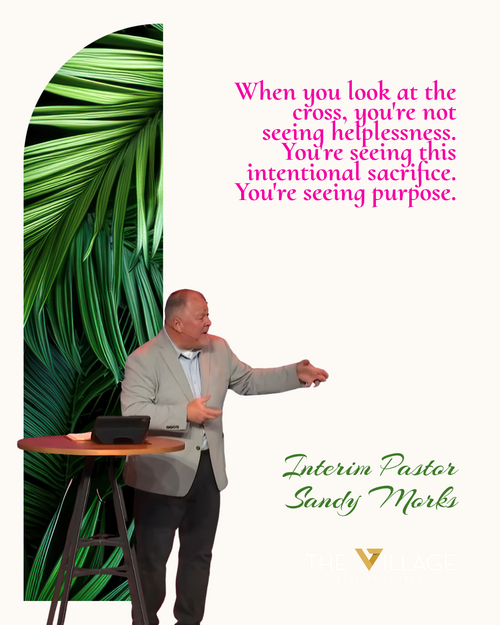
There's a crucial difference between dying as a victim and dying as a substitute. A victim suffers unwillingly, but Jesus stepped into His death willingly. As He said in John 10, "I lay down my life. No one takes it from me." When we look at the cross, we're not seeing helplessness - we're seeing intentional sacrifice with purpose.

The Principle of the Seed
Jesus uses a farming illustration in John 12:24: "Unless a grain of wheat falls to the ground and dies, it remains by itself. But if it dies, it produces much fruit." A seed has great potential, but if it remains in the package, it accomplishes nothing. Only when it's buried and dies can it multiply.
Jesus is talking about Himself here. If He had avoided the cross, it would just remain Him alone. But through His death, He would bear much fruit - every person who has ever been saved, every life changed by the gospel, every sinner who has been forgiven. The fruit only comes through death.
Jesus is talking about Himself here. If He had avoided the cross, it would just remain Him alone. But through His death, He would bear much fruit - every person who has ever been saved, every life changed by the gospel, every sinner who has been forgiven. The fruit only comes through death.
Why Jesus Had to Die: The Debt We Couldn't Pay
Sin Creates a Debt
The Bible teaches that sin is not just a mistake or bad judgment - it's rebellion against a holy God. This rebellion creates a debt, and the wages of that sin is death. We're not just talking about physical death, but spiritual separation from God for all eternity.
We Owe What We Cannot Pay
Here's our problem: we owe a debt we can't pay because of sin. No amount of money can erase sin. No amount of religion can fix it. No amount of good works can take it away. It would be like trying to pay off the national deficit - it's impossible.
Jesus Stepped In as Our Substitute
Jesus took our place and paid our debt. On the cross, He wasn't just suffering physically - He was bearing the spiritual weight of our sin. Every lie, every act of pride, every moment of rebellion was placed on Him. The punishment we deserved, He took.
The Cross: From Humiliation to Exaltation
When Jesus said "if I'm lifted up from the earth, I will draw all people to myself," He was talking about crucifixion. Historically, the cross was an instrument of humiliation. But Jesus took that instrument of humiliation and turned it into an instrument of exaltation.
The Cross as a Magnet
Jesus said the cross would draw people from every background, every nation, every story. Why? Because deep down, every person knows they owe something they cannot pay. The cross answers that universal need.
What Jesus Accomplished: Reconciliation
More Than Legal Transaction
The cross accomplished reconciliation - taking a broken relationship and restoring it. Sin didn't just make us guilty; it separated us from God. We went from being children to enemies of God. But through the cross, that relationship is restored.
Personal Implications
Because of Jesus, you are:
This isn't just a legal transaction where your debt was paid. It's a relational restoration - God doesn't just cancel your debt, He brings you home.
- No longer an enemy of God, but a child of God
- No longer distant from God, but brought near to Him
- No longer condemned, but forgiven
This isn't just a legal transaction where your debt was paid. It's a relational restoration - God doesn't just cancel your debt, He brings you home.
The Invitation of the Cross
Jesus said He would "draw" people to Himself - not coerce or force. The cross extends an invitation to lay down your sin, stop trying to pay a debt you can't pay, and trust in what Jesus has already done for you.
Life Application
Understanding the cross should transform how we live today. Here are four key applications:
Stop trying to pay what's already been paid. Some of us are still living like we owe God something, trying to earn His love through guilt-driven service instead of love-driven worship.
Rest in reconciliation. You don't have to wonder where you stand with God. If you are in Christ, you are accepted, loved, and His.
Live as fruit of the cross. Your life should reflect Him. You won't reflect Him perfectly, but you should reflect Him genuinely as God's Spirit transforms you.
Share the message. People all around you are carrying a debt they cannot pay. Be eager to share that Jesus died to pay the price for them.
The message of Christianity isn't just that Jesus died - it's that Jesus died for a reason. He died to pay a debt we couldn't pay, to take the punishment we deserved, and to restore a relationship we broke.
Questions for Reflection:
Stop trying to pay what's already been paid. Some of us are still living like we owe God something, trying to earn His love through guilt-driven service instead of love-driven worship.
Rest in reconciliation. You don't have to wonder where you stand with God. If you are in Christ, you are accepted, loved, and His.
Live as fruit of the cross. Your life should reflect Him. You won't reflect Him perfectly, but you should reflect Him genuinely as God's Spirit transforms you.
Share the message. People all around you are carrying a debt they cannot pay. Be eager to share that Jesus died to pay the price for them.
The message of Christianity isn't just that Jesus died - it's that Jesus died for a reason. He died to pay a debt we couldn't pay, to take the punishment we deserved, and to restore a relationship we broke.
Questions for Reflection:
- Have you trusted in what Jesus has done for you on the cross, or are you still trying to earn God's love?
- Are you living in the freedom of forgiveness, or are you still carrying guilt and shame for sins already paid for?
- How can you share the message of the cross with someone in your life who needs to hear it this week?
Posted in Sermons
Posted in Village Baptist Church, The Final Week, Sermon Recap, Sunday Sermon, Sermon, Baptist Church, The Village Baptist Church, Road to Easter
Posted in Village Baptist Church, The Final Week, Sermon Recap, Sunday Sermon, Sermon, Baptist Church, The Village Baptist Church, Road to Easter
Recent
Perfect Love Drives Out Fear: What the Bible Says About Fear, Faith, and God's Love
October 7th, 2026
How to Recognize False Teaching: What the Bible Says About Spiritual Discernment
September 29th, 2026
What Does Real Love Look Like? Lessons from 1 John 3 on Living Out Your Faith
September 23rd, 2026
Children of God: What It Means to Belong to the Father
September 16th, 2026
Don't Be Fooled: How to Recognize Deception and Stay Rooted in Christ
September 9th, 2026
Archive
2026
January
February
March
April
May
June
July
August
September
More Than Words: What Real Faith Actually Looks LikeDon't Be Fooled: How to Recognize Deception and Stay Rooted in ChristChildren of God: What It Means to Belong to the FatherWhat Does Real Love Look Like? Lessons from 1 John 3 on Living Out Your FaithHow to Recognize False Teaching: What the Bible Says About Spiritual Discernment
2025
November
No Comments