
When Doubt Meets the Risen Christ: Finding Faith in Our Questions

When Doubt Meets the Risen Christ: Finding Faith in Our Questions
We've all been there - surrounded by people celebrating something we can't quite bring ourselves to believe. While others rejoice, we wrestle. While some worship, we hesitate. This was exactly where Thomas found himself in the days following Jesus' resurrection.
Doubt is something every believer faces, yet it often leaves us feeling isolated or uncertain in our faith. This past Sunday, Pastor Sandy reminded us through Thomas’s story that doubt isn’t the end of the journey—it can be the very place where Jesus meets us, strengthens us, and draws us into a deeper, more personal faith in Him.
The Reality of Thomas's Doubt
Thomas wasn't dealing with minor uncertainty or a few small questions. His doubt was deep and settled. Despite being one of the twelve disciples who had walked with Jesus, heard His teaching, and witnessed His miracles, Thomas still struggled to believe that Jesus had risen from the dead.
Why Did Thomas Doubt?
Thomas's doubt was rooted in absence. The text tells us plainly: "Thomas, called Twin, one of the 12, was not with them when Jesus came" (John 20:24). He had missed the moment when Jesus first appeared to the other disciples. While they had a shared experience of seeing the risen Christ, Thomas stood outside of that reality.
This teaches us an important lesson: distance often intensifies doubt. When we step away from gathering with God's people, from regular rhythms of worship, and from being under God's word, we shouldn't be surprised when our confidence begins to wane.
This teaches us an important lesson: distance often intensifies doubt. When we step away from gathering with God's people, from regular rhythms of worship, and from being under God's word, we shouldn't be surprised when our confidence begins to wane.
Doubt Despite Evidence
Thomas wasn't lacking testimony. Ten eyewitnesses - his fellow disciples - were all telling him the same thing: "We have seen the Lord!" Yet Thomas declared, "If I don't see the mark of the nails in his hands, put my finger in the mark of the nails and put my hand into his side, I will never believe" (John 20:25).
This reveals something crucial about doubt: it's not always the absence of evidence. Sometimes it's simply a refusal to accept the evidence that's right in front of us. Thomas had moved from questioning to making demands, establishing his own criteria for belief.
This reveals something crucial about doubt: it's not always the absence of evidence. Sometimes it's simply a refusal to accept the evidence that's right in front of us. Thomas had moved from questioning to making demands, establishing his own criteria for belief.
The Patience of Our Savior
What happened next reveals the beautiful character of Jesus. A full week passed with Thomas remaining in his unbelief. But then Jesus appeared again, and His response was remarkable.
Jesus Comes Intentionally
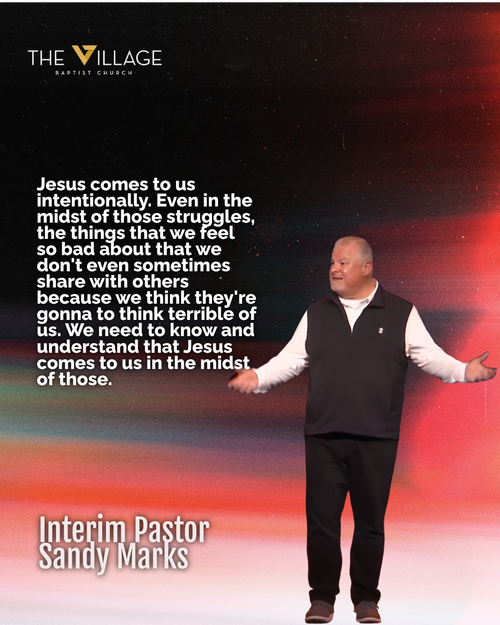
This wasn't an accidental encounter. Jesus came with purpose, immediately addressing Thomas specifically. Even though the doors were locked, Jesus appeared and said, "Peace be with you. Then he said to Thomas, 'Put your finger here and look at my hands. Reach out your hand and put it into my side. Don't be faithless, but believe'" (John 20:26-27).
Jesus Knows Our Struggles
Notice that Jesus used the very words Thomas had spoken earlier. He was fully aware of Thomas's doubt, even when Thomas thought no one else knew. This reveals something powerful about our Savior: He knows every question, every fear, every hesitation we struggle with in our walk with Him.
Grace and Truth in Balance
Jesus met Thomas right where he was, offering the evidence he demanded. But He didn't stop there. He called Thomas to respond: "Don't be faithless, but believe." This shows us the beautiful balance between grace and truth. Jesus meets us in our struggles, but He refuses to leave us there because of how much He loves us.
From Doubt to Declaration
Thomas's response was immediate and complete: "My Lord and my God!" (John 20:28). This wasn't just acknowledging that Jesus was alive - it was a full declaration of who Jesus is.
What "My Lord" Means
By saying "my Lord," Thomas was submitting himself to Jesus's lordship. He was recognizing Jesus as boss, as the one in charge. This is crucial because we cannot have Jesus as Savior without submitting to Him as Lord. True faith involves both salvation and surrender.
A Personal Faith
Thomas didn't say "the Lord" or "a Lord" - he said "my Lord, my God." His faith became personal at that moment. The goal of true faith isn't just awareness of Jesus, but personal surrender to Him. You can't get to heaven on someone else's faith - it must be your own personal confession and commitment.
Faith Without Sight
Jesus then made a profound statement: "Because you have seen me, you have believed. Blessed are those who have not seen and yet believe" (John 20:29). This includes every believer after the apostolic age - including us today.
How Can We Believe Without Seeing?
Our faith rests on reliable testimony: the witness of Scripture, the testimony of the apostles, and the historical reality of the resurrection. While we don't have the physical encounter Thomas had, we have solid ground for our faith. The Spirit of God opens our eyes to see truth through His word and the testimony of those who witnessed Christ firsthand.
Life Application
Thomas's story teaches us several important lessons for our own faith journey. First, guard your heart against isolating doubt. When faith is weak, our tendency is to withdraw from the body of Christ, but these are the times we need community most. Second, refuse to place conditions on your belief - don't demand that God prove Himself on your terms. Third, take comfort in Christ's patience with struggling believers. He knows your questions and comes to you with compassion. Fourth, respond personally to the risen Christ - it's not enough to know about Jesus; you must confess Him as your own Lord and God. Finally, embrace the blessing of believing without seeing - trust Him even when you don't understand everything about your journey.
This week, consider where you might be isolating yourself during times of doubt instead of drawing closer to God's people and His word. Ask yourself: Am I trying to make demands on God rather than submitting to His lordship? Have I made a personal confession of faith, or am I relying on someone else's relationship with God? How can I trust God more fully in areas where I don't have all the answers?
Like Thomas, you may have started as a skeptic, but you don't have to end there. When you encounter the risen Christ for who He really is, doubt can give way to a tremendous declaration: "My Lord and my God!"
This week, consider where you might be isolating yourself during times of doubt instead of drawing closer to God's people and His word. Ask yourself: Am I trying to make demands on God rather than submitting to His lordship? Have I made a personal confession of faith, or am I relying on someone else's relationship with God? How can I trust God more fully in areas where I don't have all the answers?
Like Thomas, you may have started as a skeptic, but you don't have to end there. When you encounter the risen Christ for who He really is, doubt can give way to a tremendous declaration: "My Lord and my God!"
Head To The Posts Below For More In This Series
Posted in Sermons
Posted in Village Baptist Church, Sermon Recap, Sermon, Sunday Sermon, Aftershock, Sermon Series, Finding Faith
Posted in Village Baptist Church, Sermon Recap, Sermon, Sunday Sermon, Aftershock, Sermon Series, Finding Faith
Recent
How to Keep God's Blessing: 5 Essentials for a Worthy Walk
October 14th, 2026
Perfect Love Drives Out Fear: What the Bible Says About Fear, Faith, and God's Love
October 7th, 2026
How to Recognize False Teaching: What the Bible Says About Spiritual Discernment
September 29th, 2026
What Does Real Love Look Like? Lessons from 1 John 3 on Living Out Your Faith
September 23rd, 2026
Children of God: What It Means to Belong to the Father
September 16th, 2026
Archive
2026
January
February
March
April
May
June
July
August
September
More Than Words: What Real Faith Actually Looks LikeDon't Be Fooled: How to Recognize Deception and Stay Rooted in ChristChildren of God: What It Means to Belong to the FatherWhat Does Real Love Look Like? Lessons from 1 John 3 on Living Out Your FaithHow to Recognize False Teaching: What the Bible Says About Spiritual Discernment
2025
November
No Comments