
When Planning Becomes Presumption: Finding God's Will in Our Plans
Life is full of plans. We set goals, make schedules, create to-do lists, and map out our futures down to the smallest details. Some of us even add things to our to-do lists that we've already completed just for the satisfaction of checking them off! While planning itself isn't wrong—it's actually wise stewardship—there's a dangerous line we can cross when our planning turns into presumption.
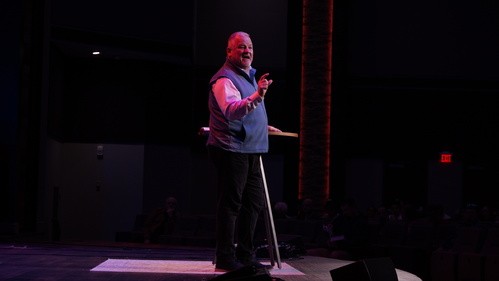
The Illusion of Control
James 4:13-17 confronts us with a sobering reality about our relationship with planning and control. When James says "Come now," he's giving us a pastoral wake-up call—the equivalent of a parent saying "we really need to talk." He's describing people who make confident declarations about their future: "Today or tomorrow we will travel to such and such a city and spend a year there and do business and make a profit."
Notice how meticulously detailed this plan is. There's timing, location, duration, activity, and even expected outcomes. Every variable seems accounted for. It appears to be a great plan—except for one glaring omission: God isn't mentioned anywhere in it.
Notice how meticulously detailed this plan is. There's timing, location, duration, activity, and even expected outcomes. Every variable seems accounted for. It appears to be a great plan—except for one glaring omission: God isn't mentioned anywhere in it.
What Does Functional Independence Look Like?
This is what we might call "functional independence"—behaving as if we have sovereignty over our lives. It shows up everywhere:
We make our plans and then sometimes invite God to bless decisions we've already made, rather than seeking His guidance from the beginning.
- Parents making decisions for their children without seeking God's guidance
- Leaders planning ministries without prayer
- Students choosing career paths based solely on salary and prestige
- Couples making financial decisions apart from God's wisdom
We make our plans and then sometimes invite God to bless decisions we've already made, rather than seeking His guidance from the beginning.
The Reality of Our Limits
James confronts our illusion of control with a reality check in verse 14: "Yet you do not know what tomorrow will bring. What is your life? For you are like a vapor that appears for a little while, then vanishes."
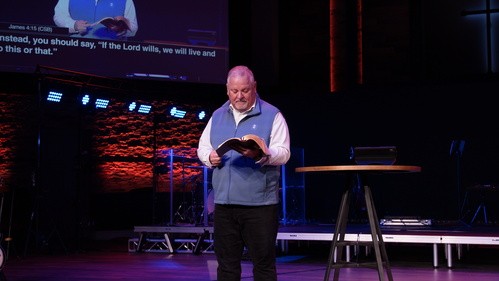
We Don't Know About Tomorrow
We pretend we have tomorrow figured out, but life repeatedly reminds us we're not in control. A phone call can change everything. A sudden diagnosis can redirect our path. A ministry opportunity can vanish in a moment. A relationship can change in an instant.
Certainty belongs only to God. Humility begins when self-certainty ends. As long as we think we know everything and have it all under control, we're less likely to depend on God.
Certainty belongs only to God. Humility begins when self-certainty ends. As long as we think we know everything and have it all under control, we're less likely to depend on God.
Life Is a Vapor
James isn't trying to depress us with this truth—he's providing clarity. When we understand how brief and fragile life is, it puts everything in perspective. Think about your breath on a cold morning—you see it, and then it's gone. That's life.
When we live as if life is endless, we postpone important things:
But when we remember how brief life is, urgency returns. We forgive sooner, serve more faithfully, and surrender more fully to Christ.
When we live as if life is endless, we postpone important things:
- Reconciliation gets pushed out
- Generosity gets deferred
- Spiritual growth gets delayed
But when we remember how brief life is, urgency returns. We forgive sooner, serve more faithfully, and surrender more fully to Christ.
The Posture of Surrender
What Surrendered Planning Looks Like
In verse 15, James calls us to a different approach: "Instead you should say, 'If the Lord wills, we will live and do this or that.'" This isn't a magical formula—it's a heart position.
Surrendered planning doesn't mean being passive or lazy. It's not about praying and then sitting around waiting for God to work everything out. True surrender is active participation under God's authority.
Think of it like sailing. A sailor adjusts the sails, charts the course, and navigates obstacles—they do everything they can. But the one thing they don't control is the wind. We do everything we can in life, but we do it recognizing that God controls the outcomes.
Surrendered planning doesn't mean being passive or lazy. It's not about praying and then sitting around waiting for God to work everything out. True surrender is active participation under God's authority.
Think of it like sailing. A sailor adjusts the sails, charts the course, and navigates obstacles—they do everything they can. But the one thing they don't control is the wind. We do everything we can in life, but we do it recognizing that God controls the outcomes.
The Danger of Presumptuous Pride
How Pride Shows Up in Our Planning
James warns that planning without God is pride because it assumes self-sufficiency. This pride can be subtle:
- Resisting correction from others
- Panicking when plans change
- Defining our identity by achievements
- Praying prayers that inform God instead of asking for guidance
Questions to Diagnose Unhealthy Pride
- Do I pray before making decisions, or do I just inform God afterward?
- Do I panic when things change?
- Do I measure myself by outcomes rather than obedience?
- Do I resist correction from others?
Pride displaces dependence, and when dependence fades, our faith weakens.
Faith Requires Obedient Response
James expands our understanding of sin in verse 17: "So it is sin to know the good and yet not do it." We often think of sin as things we shouldn't do, but James adds that sin is also knowing what we should do and choosing not to do it.
The Danger of Delayed Obedience
Spiritual maturity isn't measured by knowledge—it's measured by obedience. Here's what we need to understand:
- Delayed obedience hardens our heart
- Immediate obedience sharpens our discernment
- Faith grows most through responsive action, not accumulation of knowledge
Life Application
James doesn't tell us to stop planning—he tells us to stop presuming we have control over things we don't. Here are five practical ways to apply this truth:
The spotlight of the future was never meant to be in your hands—it belongs solely to God. This isn't frightening; it's freeing. The One directing your tomorrow sees fully, knows completely, loves perfectly, and leads faithfully.
Questions for Reflection:
Plan, dream, and strategize—but do it surrendered under God's authority, anchored in "if the Lord wills." That's faith without filters, trust beyond control, and living in God's spotlight rather than your own.
- Begin every plan with prayer - Invite God in before decisions are formed
- Hold your plans with humble flexibility - Expect shifts and be willing to pivot
- Measure success by faithfulness, not outcomes - Obedience is eternal; worldly success is temporary
- Practice daily surrender - Surrender isn't a one-time decision but a daily choice
- Act immediately on known obedience - Don't delay when God shows you the next step
The spotlight of the future was never meant to be in your hands—it belongs solely to God. This isn't frightening; it's freeing. The One directing your tomorrow sees fully, knows completely, loves perfectly, and leads faithfully.
Questions for Reflection:
- Is there an area where you need to surrender control to God?
- What has God been showing you recently that you haven't acted on?
- How can you begin involving God in your planning process from the very beginning?
- What would change in your life if you truly believed that time is a gift, not a guarantee?
Plan, dream, and strategize—but do it surrendered under God's authority, anchored in "if the Lord wills." That's faith without filters, trust beyond control, and living in God's spotlight rather than your own.
Recent
Perfect Love Drives Out Fear: What the Bible Says About Fear, Faith, and God's Love
October 7th, 2026
How to Recognize False Teaching: What the Bible Says About Spiritual Discernment
September 29th, 2026
What Does Real Love Look Like? Lessons from 1 John 3 on Living Out Your Faith
September 23rd, 2026
Children of God: What It Means to Belong to the Father
September 16th, 2026
Don't Be Fooled: How to Recognize Deception and Stay Rooted in Christ
September 9th, 2026
Archive
2026
January
February
March
April
May
June
July
August
September
More Than Words: What Real Faith Actually Looks LikeDon't Be Fooled: How to Recognize Deception and Stay Rooted in ChristChildren of God: What It Means to Belong to the FatherWhat Does Real Love Look Like? Lessons from 1 John 3 on Living Out Your FaithHow to Recognize False Teaching: What the Bible Says About Spiritual Discernment
2025
November
No Comments